The Fabric Fiasco That Taught Me to Respect Expertise (and how you can avoid my mistakes)
In my first year handling textile orders (2018), I made the classic rookie mistake: I assumed fabric buying was mostly about price and delivery speed. I was wrong. But the real wake-up call came in September 2022, when a single order of about 15 different SKUs turned into a $3,200 disaster that cost me an extra $890 in redo fees, a three-week delay, and a serious dent in my credibility with a client.
That order included custom cotton lycra fabric for leggings, lycra swim shirts for a small sports brand, dishcloth yarn for a kitchen linens startup, nylon culottes for a fashion label, and a batch of baby onesies made from viscose. Seemed straightforward enough—just fabric, right? Wrong. Each item failed for a different reason, and every failure traced back to a single root cause: I didn't know what I didn't know.
The order that looked fine on paper
The client had sent me specs that looked clear. Custom cotton lycra fabric: 95% cotton, 5% elastane, 180 gsm. Lycra swim shirts: 80% nylon, 20% elastane, UPF 50+. Dishcloth yarn: 100% cotton, medium weight. Nylon culottes: 100% nylon, lightweight. Baby onesies: 95% viscose, 5% elastane.
I sourced from five different mills, got competitive quotes, and placed the order. The first red flag came three weeks later when the custom cotton lycra fabric arrived. The stretch recovery was terrible—the leggings bagged out after one wear. The swim shirts lost their shape after two pool sessions. The dishcloth yarn was so rough it scratched dishes. The nylon culottes shrank 8% after the first wash. And the baby onesies—honestly, the viscose fabric felt fine, but the mom who bought one reported a rash on her baby's neck within hours.
What I thought I knew (but clearly didn't)
Most buyers focus on fiber content and weight—I certainly did. The question everyone asks is "what's the blend?" The question they should ask is "what's the performance of this blend for the specific end use?"
Here's what I missed on each item:
Custom cotton lycra fabric
I thought cotton + spandex = stretchy comfortable fabric. But the mill used a generic spandex with poor elastic recovery, and the cotton wasn't combed, so it pilled after a few washes. Worse, the fabric wasn't pre-shrunk. The first consumer wash caused 5% shrinkage, which completely ruined the leggings' fit.
People think a higher elastane percentage guarantees better stretch recovery. Actually, the quality of the spandex fiber and the knitting tension matter far more. A cheap spandex can lose 20% of its recovery after 10 washes; Lycra® branded fiber typically retains over 95% after 50 washes (per industry testing, as of 2022).
Lycra swim shirts
The swim shirts used “elastane” but the mill didn't specify chlorine resistance. Standard spandex degrades quickly in chlorinated water—the fabric can lose half its stretch within 30 swims. The shirts also lacked a UV stabilizer, so the UPF 50+ claim was only valid when new. After a few exposures, the actual protection dropped to about UPF 20.
The assumption was that all spandex works for swimwear. The reality is that swim fabrics require chlorine-resistant fiber (often labeled as “Lycra® Xtra Life™” or similar), plus a tighter knit to prevent bagging.
Dishcloth yarn
Dishcloth yarn seems simple: 100% cotton, right? But not all cotton is created equal for scrubbing. The yarn I ordered was a soft, mercerized cotton that felt smooth—which is the opposite of what you want for scrubbing dishes. It absorbed water slowly and didn't create any abrasive texture. The startup's customers complained the cloths just pushed grease around.
The obvious factor was fiber content. The overlooked factor was twist level and surface texture. A good dishcloth yarn uses a tighter twist and often a slub or bouclé structure to create scrubby bumps.
Nylon culottes
Nylon is known for being strong and wrinkle-resistant, but it's also sensitive to heat. The mill used a standard nylon 6, which shrinks significantly in hot water (above 40°C). The fashion label had recommended cold wash, but consumers don't always follow instructions. The culottes came back from the first warm wash 8% shorter.
What I didn't know: nylon 6.6 is more heat-resistant than nylon 6, and high-tenacity nylon is even better for garments that might see warm water. I also ignored the fabric's finishing—no heat-setting step meant the yarn was unstable.
Is viscose safe for babies?
This one stung the most. Viscose is made from wood pulp—feels soft, breathable, sounds natural. But the production process uses harsh chemicals (carbon disulfide, caustic soda), and if the fiber isn't thoroughly washed and neutralized, residual chemicals can cause skin irritation in sensitive babies.
The question everyone asks is “is viscose safe for babies?” The question they should ask is “which type of viscose, and how is it finished?” Lyocell (Tencel®) is a closed-loop viscose alternative with much lower chemical residue. Standard viscose can pass Oeko-Tex if properly treated, but many budget viscose fabrics don't meet infant-wear standards. My mill's viscose wasn't certified for baby use—I didn't ask.
The cost of overconfidence
Let me put numbers on it. The original order was $3,200. After months of back-and-forth, re-sourcing, and re-making, the total cost hit $4,090. That's $890 in extra material, shipping, and testing. Plus a lost client (they moved to a competitor). Plus the embarrassment of having to explain to my boss why a “simple” fabric order went sideways.
Why did this happen? Because I assumed I could be a generalist—that fabric is fabric, and any mill can handle any request. That assumption is the root cause.
What I do now: respect the boundary of expertise
The vendor who said “this isn't our strength—here's who does it better” earned my trust for everything else. I now have a pre-check list for every new fabric category, and I don't pretend to know more than I do.
Here's the short version of that list:
- For stretch fabrics: Ask about spandex type (branded Lycra® vs generic), elastic recovery percentage after 20 washes, and shrinkage.
- For swimwear: Confirm chlorine resistance and UV durability. Request a test certificate.
- For dishcloth yarns: Check twist level and surface structure. Order a sample and scrub a plate.
- For nylon garments: Specify heat-set, and ask about nylon type (6 vs 6.6).
- For baby apparel: Demand Oeko-Tex Standard 100 or GOTS certification. Consider lyocell instead of viscose.
I'd rather work with a specialist who knows their limits than a generalist who overpromises. That $3,200 mistake taught me that being a good buyer isn't about knowing everything—it's about knowing who to trust for each piece of the puzzle.
(Pricing note: as of January 2025, comparable orders can save 15-25% by splitting across specialized mills rather than trying to source everything from one “full-service” supplier. Verify current rates at your chosen vendors.)
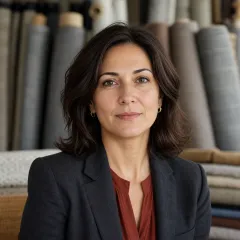
Lucia Bianchi
Lucia Bianchi is a woven apparel-fabric analyst covering cotton, linen, wool, rayon, denim, shirting, twill, satin, poplin, and blended garment fabrics. She applies the ISO 1833 series for fibre composition and ISO 105-C06 for laundering colourfastness while checking GSM, yarn count, usable width, shrinkage, skew, shade grade, drape, and surface defects. Her specification guides help designers, sourcing teams, and mills align fibre claims, lab dips, bulk tolerances, care conditions, and garment performance before production approval.