Why I Stopped Buying Fabric by Brand Name (And What I Check Instead)
Lycra is a brand name. Not a quality guarantee.
I learned that the hard way—or rather, I learned it after a $2,800 mistake in 2023 that our finance team still brings up in meetings. Since 2020, I've handled procurement for our 400-person manufacturing company across three locations. That covers everything from office supplies to the cycling kits we order for our annual charity ride, to the motorcycle gear our field team requests. Roughly 60–80 orders a year. Maybe 80, I'd have to check the system—I'm mixing it up with last year's count.
My position is straightforward: if you're still choosing stretch fabric based on the brand name on the spandex, you're using a playbook from 2015. The textile industry has changed. The brand on the fiber tells you less about the finished product than it used to. And I say this as someone who happily pays for quality—I'm not trying to cut corners.
What the Textile Plant Visit Taught Me
In early 2023, I visited a textile plant in South Carolina as part of a vendor audit. We were there because our previous supplier kept delivering red Lycra shorts for the charity ride with inconsistent color—some batches looked fire-engine red, others leaned toward rust. For team uniforms, that's a problem.
I assumed the issue was the fiber. The order said "Lycra." How could they get it wrong? The plant manager smiled and walked me through their weaving floor, then their finishing line.
"You can use the same grade of fiber and end up with completely different fabric depending on how you finish it," he said. "The fiber isn't the problem. The process is."
That visit changed how I think about procurement. My entire mental model had been: pick the brand name, compare prices, place the order. But fabric is a recipe. The fiber matters, sure. But so does the yarn count, the knit structure, the finishing treatment, and the quality control on the line. If procurement teams aren't reading specs at that level, they're not actually evaluating the product—they're just reading the label.
Fiber Branding Isn't Fabric Branding
Here's what took me too long to understand: a branded fiber does not make a branded fabric. The two are different things, and conflating them costs money.
Think about the question people ask about Kevlar for motorcycle gear. "Is Kevlar good for motorcycle gear?" misses the point. Kevlar is a fiber. Whether it's good depends on where in the garment it's deployed, the denier, how it's woven, and the overall abrasion resistance testing. A jacket with a Kevlar-lined impact zone and a jacket that's 90% polyester with a Kevlar patch in the elbow aren't comparable—even though both say "Kevlar" on the hang tag.
Stretch fabric works the same way. A fabric with 5% Lycra content and one with 12% will behave differently. A single-knit and a double-knit will recover differently after stretch cycles. Two suppliers can start with the same fiber and deliver finished rolls with 20% differences in elongation. The brand name on the fiber doesn't tell you any of that.
In my first year, I made the classic specification error: assumed "standard stretch fabric" meant the same thing to every vendor. Cost me a $1,800 redo when the order arrived with a completely different blend ratio than we needed. That's a mistake you only make once.
The 'Just Pick a Brand' Era Is Over
The "choose a trusted brand and you're safe" thinking comes from a period when certification and third-party testing were less accessible. In 2015, if you needed reliable performance fabric, going with a known brand was genuinely the simplest path to a consistent product.
That's changed. Manufacturing processes have evolved. Like velvet—which used to be a fabric you'd avoid for anything practical because it crushed and snagged—now functions in performance contexts that would've seemed impossible a decade ago. A textile category that was once purely decorative now competes for durability applications. The industry is actively reshaping what each fabric type can do.
I'm not saying brand names are worthless. They still represent a baseline of consistency. But "branded" has become a floor, not a ceiling. The best fabric for your specific application might not carry the label you expect—and that's fine.
But Doesn't a Brand at Least Guarantee Consistency?
I can hear the counterargument: at least a brand guarantees the same thing every time you order. That matters when you need repeat production runs.
Fair point. But consistency and suitability aren't the same thing. If the fabric spec is wrong for your use case, getting the same wrong product every time doesn't help. And honestly? We've switched to three non-branded supply sources over the past two years and our consistency has actually improved. Why? Because I write the specs on the PO now—weight tolerance, stretch recovery percentage, colorfastness rating, finishing requirements. Written into the purchase agreement. When you define quality yourself, you're less dependent on a brand's internal standards.
Now, I should note: this works because we order relatively small volumes with clear specs. At scale, brand certification might carry more weight. That said, for a mid-size company like ours, owning the specifications has been the smarter play.
What I Do Instead
Brand names still appear on my purchase orders—I just don't lead with them. Here's what I check first:
- Actual fabric specifications (weight, blend ratio, stretch recovery, color tolerance)
- Vendor's finishing capability and QC process—documented, not just promised
- Whether they'll accept third-party testing on delivered goods, not just pre-production samples
- Color consistency data across previous batches (Pantone Delta E tolerances, not verbal promises)
- Their track record on reorders, not just first orders
Brand preference comes after those checks. It becomes a tiebreaker, not a starting point.
The fundamentals—performance, consistency, cost—haven't changed. What's changed is that the brand label is no longer the shortcut to those fundamentals. It used to be. It isn't anymore.
That's not a knock on brands. It's just an updated map of where to look first.
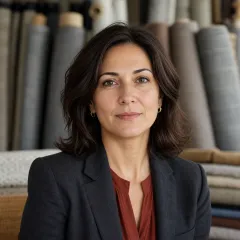
Lucia Bianchi
Lucia Bianchi is a woven apparel-fabric analyst covering cotton, linen, wool, rayon, denim, shirting, twill, satin, poplin, and blended garment fabrics. She applies the ISO 1833 series for fibre composition and ISO 105-C06 for laundering colourfastness while checking GSM, yarn count, usable width, shrinkage, skew, shade grade, drape, and surface defects. Her specification guides help designers, sourcing teams, and mills align fibre claims, lab dips, bulk tolerances, care conditions, and garment performance before production approval.